
Several processing methods for threads
author: liris
2024-06-13
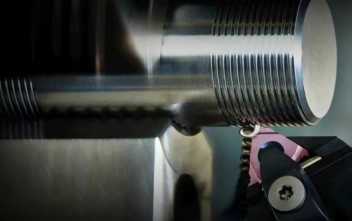
Cutting threads can be divided into the following five categories based on different processing methods: turning threads, milling threads, grinding threads, grinding threads, tapping and threading.
1.turning threads
Turning threads on a lathe can be done using a forming tool or a thread comb. Using formed turning tools to turn threads, the tool structure is simple and suitable for single piece and small batch production of threaded workpieces; Turning threads with a thread comb cutter has high production efficiency, but the tool structure is complex and only suitable for turning short threaded workpieces with fine teeth in medium and large-scale production.
2.Milling threads
Use a disc milling cutter or comb milling cutter on a thread milling machine for milling. Disc milling cutters are mainly used for milling trapezoidal external threads on workpieces such as screw and worm. Comb shaped milling cutters are used for milling internal and external ordinary threads and tapered threads. Due to the use of multi edge milling cutters for milling, the length of the working part is larger than the length of the processed thread. Therefore, the workpiece only needs to be rotated 1.25-1.5 revolutions to be processed, resulting in high production efficiency. This method is suitable for mass production of threaded workpieces with general accuracy or rough machining before grinding.
3.Grinding threads
Grinding threads is a precision thread produced on a thread grinder, mainly for hardened workpieces. According to the different cross-sectional shapes of the grinding wheel, it is divided into two types: single line grinding wheel and multi line grinding wheel. The pitch accuracy that can be achieved by single line grinding wheel is 5-6 levels, and the grinding wheel dressing is more convenient. This method is suitable for grinding precision screws, thread gauges, worms, small batch threaded workpieces, and precision hobs. Multi line grinding wheel grinding can be divided into two types: longitudinal grinding method and cut in grinding method. The width of the grinding wheel in the longitudinal grinding method is smaller than the length of the ground thread. The grinding wheel can be moved longitudinally once or several times to grind the thread to the final size. The width of the grinding wheel in the cut in grinding method is greater than the length of the thread to be ground. The grinding wheel radially cuts into the surface of the workpiece, and the workpiece can be ground by about 1.25 revolutions. The productivity is high, but the accuracy is slightly low, and the grinding wheel dressing is relatively complex. The cutting in grinding method is suitable for grinding large batches of taps and grinding certain fastening threads.
4.Grinding threads
Use soft materials such as cast iron to make nut or screw type thread grinding tools, and perform forward and reverse rotation grinding on the parts of the workpiece where there is pitch error in the processed threads to improve pitch accuracy. Hardened internal threads are usually ground to eliminate deformation and improve accuracy.
Use soft materials such as cast iron to make nut or screw type thread grinding tools, and perform forward and reverse rotation grinding on the parts of the workpiece where there is pitch error in the processed threads to improve pitch accuracy. Hardened internal threads are usually ground to eliminate deformation and improve accuracy.
5.Tapping and threading
Tapping refers to using a certain torque to thread a tap into a pre drilled bottom hole on a workpiece to process internal threads. Thread threading is the process of cutting external threads on a bar (or tube) workpiece using a die. The machining accuracy of tapping or threading depends on the accuracy of the tap or die. Although there are many methods for processing internal and external threads, small diameter internal threads can only be processed with a tap. Tapping and threading can be done manually, as well as using lathes, drilling machines, machining centers, tapping machines, and threading machines.
Tapping refers to using a certain torque to thread a tap into a pre drilled bottom hole on a workpiece to process internal threads. Thread threading is the process of cutting external threads on a bar (or tube) workpiece using a die. The machining accuracy of tapping or threading depends on the accuracy of the tap or die. Although there are many methods for processing internal and external threads, small diameter internal threads can only be processed with a tap. Tapping and threading can be done manually, as well as using lathes, drilling machines, machining centers, tapping machines, and threading machines.
6.Thread rolling
Thread rolling is a processing method that uses forming rolling molds to produce plastic deformation of the workpiece in order to obtain threads. It is suitable for mass production of standard fasteners and external threads of other threaded connectors. The outer diameter of the rolled thread generally does not exceed 25 millimeters, and the length does not exceed 100 millimeters. The thread accuracy can reach level 2, and the diameter of the blank used is roughly equal to the pitch diameter of the processed thread. Rolling generally cannot process internal threads, but for workpieces with softer materials, slotless extrusion taps can be used to cold extrude internal threads (with a maximum diameter of about 30 millimeters), and the working principle is similar to tapping. The required torque for cold extrusion of internal threads is about twice that of tapping, and the machining accuracy and surface quality are slightly higher than tapping. According to different rolling molds, thread rolling can be divided into two types: thread rolling and thread rolling.
7.Rubbing silk
Two threaded thread plates are arranged in a staggered manner with a pitch of 1/2 relative to each other. The stationary plate is fixed, while the moving plate moves in a reciprocating linear motion parallel to the stationary plate. When the workpiece is fed between two plates, the moving plate moves forward to rub and press the workpiece, causing its surface to undergo plastic deformation and form threads.
Two threaded thread plates are arranged in a staggered manner with a pitch of 1/2 relative to each other. The stationary plate is fixed, while the moving plate moves in a reciprocating linear motion parallel to the stationary plate. When the workpiece is fed between two plates, the moving plate moves forward to rub and press the workpiece, causing its surface to undergo plastic deformation and form threads.
8.Rolling thread
There are three types of thread rolling: radial thread rolling, tangential thread rolling, and rolling head thread rolling.
① Radial thread rolling: Two (or three) threaded thread rolling wheels are installed on parallel axes, and the workpiece is placed on a support between the two wheels. The two wheels rotate at the same speed in the same direction, and one wheel also performs radial feed motion. The workpiece rotates under the drive of the thread rolling wheel, and the surface is subjected to radial compression to form threads. For certain screws with low precision requirements, a similar method of rolling forming can also be used.
There are three types of thread rolling: radial thread rolling, tangential thread rolling, and rolling head thread rolling.
① Radial thread rolling: Two (or three) threaded thread rolling wheels are installed on parallel axes, and the workpiece is placed on a support between the two wheels. The two wheels rotate at the same speed in the same direction, and one wheel also performs radial feed motion. The workpiece rotates under the drive of the thread rolling wheel, and the surface is subjected to radial compression to form threads. For certain screws with low precision requirements, a similar method of rolling forming can also be used.
② Tangential thread rolling: also known as planetary thread rolling, the rolling tool consists of one rotating central thread rolling wheel and three fixed arc-shaped thread plates. When rolling, the workpiece can be continuously fed in, so the productivity is higher than that of rolling and radial rolling.
③ Thread rolling head: It is performed on an automatic lathe and is generally used to process short threads on workpieces. There are 3-4 wire rolling wheels evenly distributed around the outer circumference of the workpiece in the rolling head. When rolling, the workpiece rotates and the rolling head feeds axially, rolling the workpiece out of the thread.
The advantages of thread rolling: ① The surface roughness is smaller than that of turning, milling, and grinding; ② The surface of the thread after rolling can improve strength and hardness due to cold work hardening; ③ High material utilization rate; ④ Productivity increases exponentially compared to cutting and is easy to achieve automation; ⑤ The service life of the rolling die is very long.
Disadvantages of thread rolling: ① Rolling threads requires that the hardness of the workpiece material does not exceed HRC40; ② High precision is required for the size of the blank; ② The precision and hardness requirements for rolling molds are also high, making it difficult to manufacture molds; ④ Not suitable for rolling threads with asymmetric tooth shape.
In addition to the common thread processing methods mentioned above, there is also an electrical discharge thread processing method, which mainly processes threads of harder materials, such as heat-treated steel parts or hard alloys. Compared with machining methods, the sequence of electric discharge is the same, and both require drilling a bottom hole first, and the diameter of the bottom hole needs to be determined according to the working condition. The electrode needs to be machined into a threaded shape, and during the machining process, the electrode needs to be able to rotate
Disadvantages of thread rolling: ① Rolling threads requires that the hardness of the workpiece material does not exceed HRC40; ② High precision is required for the size of the blank; ② The precision and hardness requirements for rolling molds are also high, making it difficult to manufacture molds; ④ Not suitable for rolling threads with asymmetric tooth shape.
In addition to the common thread processing methods mentioned above, there is also an electrical discharge thread processing method, which mainly processes threads of harder materials, such as heat-treated steel parts or hard alloys. Compared with machining methods, the sequence of electric discharge is the same, and both require drilling a bottom hole first, and the diameter of the bottom hole needs to be determined according to the working condition. The electrode needs to be machined into a threaded shape, and during the machining process, the electrode needs to be able to rotate
What is tempering
Related Article
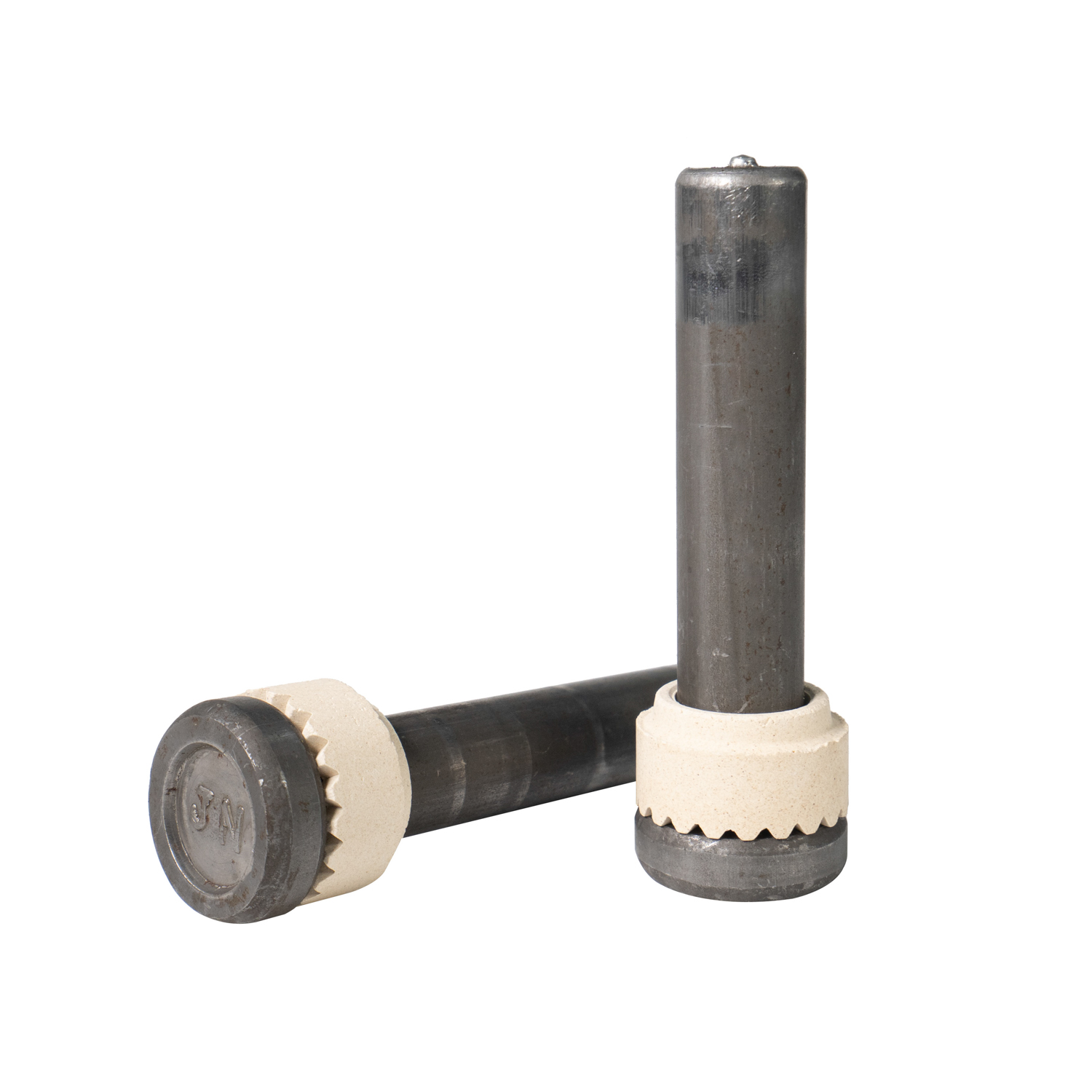
ISO 13918 SD1 shear studs, also known as SD1 shear connectors, are widely used in steel-concrete composite structures. They are welded to steel beams or plates to create a mechanical connection between steel and concrete.
ISO 13918 SD1 Shear Studs: A Simple Guide
A325 and A490 heavy hex structural bolts are widely used for high-strength steel connections in demanding construction and engineering projects.
A325 / A490 Heavy Hex Structural Bolts
EN14399-3 HR bolts are high strength structural bolting assemblies designed for preloaded steel structure connections. As an important part of the European standard EN14399 series, HR bolt assemblies are widely used in bridges, steel buildings, industrial plants, and large infrastructure projects.
EN14399-3 HR High Strength Structural Bolts for Steel Construction
SEND MESSAGE