
SHEAR CONNECTOR
AWS D1.1/D1.1M
JIS B1198-1995
ISO13918-2008
GB/TT10433-2002
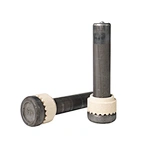
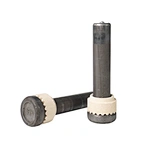
A shear connector is a critical structural component designed to transfer shear forces between steel and concrete in composite construction, creating a strong composite action that significantly enhances the load-bearing capacity and stiffness of steel-concrete composite structures. These connectors are typically manufactured in the form of headed studs, which are welded to the top flange of steel beams or girders before concrete is poured, becoming embedded in the concrete slab to resist horizontal shear forces at the steel-concrete interface. The most common type is the headed shear stud, conforming to standards such as AWS D1.1, ISO 13918, or JIS B 1198, with diameters ranging from 13 mm (1/2") to 25 mm (1") and lengths varying according to design requirements.
Shear connectors are essential in modern construction, enabling the design of more efficient and economical structures by allowing steel and concrete to work together as a single structural unit. When a composite beam is loaded, the shear connector prevents slip between the steel beam and the concrete slab, ensuring that the concrete slab (typically in compression) and the steel beam (in tension) contribute fully to the structural capacity of the member. This composite action results in increased load capacity, reduced deflection, and improved vibration performance compared to non-composite construction. Shear connectors are widely used in bridge construction, high-rise buildings, industrial mezzanines, parking garages, and other structures requiring long-span capabilities.
The installation of shear connectors is typically performed using stud welding equipment, which provides a fast and reliable method of attaching the studs to the steel beam through a controlled electric arc and pressure process. Each connector is equipped with a ceramic ferrule that concentrates the heat and protects the weld pool, ensuring consistent and high-quality welds. Shear connectors are available with various head configurations, including standard headed, headed with reduced base, or unheaded (plain) types, depending on application requirements. The design and spacing of shear connectors are calculated based on the applied loads, concrete strength, and steel properties, with design standards such as AISC (American Institute of Steel Construction) and Eurocode 4 providing comprehensive guidance. Materials used for shear connectors are typically low-carbon steel with minimum tensile strength of 450 MPa, ensuring sufficient ductility to accommodate the required deformation without fracture. Quality control measures, including weld inspection and tensile testing, are essential to verify the integrity of each connection, ensuring long-term structural safety and reliability.

